The rumor mill is buzzing as the first render images of Samsung’s upcoming budget-friendly smartphone, the Galaxy A18, have surfaced. As we look toward the future of Samsung’s mass-market strategy, this device appears to be more than just a minor iterative update. Here is a detailed breakdown of what to expect from the Galaxy A18 and why it marks a significant shift in Samsung’s mobile strategy.
Design Continuity and Physical Specifications
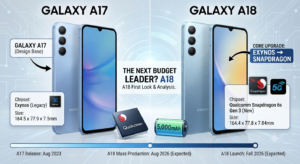
At first glance, the design of the Galaxy A18 stays remarkably consistent with its predecessor. The signature triple-camera layout on the rear remains identical to the previous model, maintaining the recognizable Samsung aesthetic.
In terms of physical dimensions, the Galaxy A18 measures 164.4 x 77.8 x 7.84mm. When compared to the Galaxy A17, this makes the new device approximately 0.1mm narrower but 0.34mm thicker. While these adjustments are minimal, they suggest slight internal modifications to accommodate new hardware components. Regarding power, rumors point to the inclusion of a 5,000mAh battery, consistent with the capacity found in the previous generation.
The Strategic Shift: Moving Away from Exynos
The most significant change for the Galaxy A18 lies within its core processing unit. According to reports from ZDNet Korea, the 5G variant of the Galaxy A18 will move away from Samsung’s in-house Exynos chips. Instead, the company is expected to transition to the Qualcomm Snapdragon series, with the Snapdragon 6s Gen 3 being the leading candidate for the chipset.
Historically, the entry-level and mid-range A series have relied heavily on Exynos processors. This pivot to Qualcomm is a noteworthy event that may signal a broader change in how Samsung manages chip procurement across its entire mid-to-low-tier lineup.
For the average consumer, this is a positive development. In many global telecommunications markets, there is a strong preference for the network stability and modem reliability associated with Qualcomm hardware. The integration of a trusted chipset—alongside proven alternatives like MediaTek—at a budget price point provides users with enhanced performance and connectivity, which is a considerable “win” for those who prioritize reliability in their mobile devices.
Pricing, Market Trends, and Launch Expectations
Regarding costs, early estimates for the international market suggest a price point of approximately £199 for the 5G model and £169 for the 4G model. These figures are quite similar to the launch prices of the Galaxy A17.
However, there is a notable variable at play: the rising cost of memory chips. This global trend in component pricing raises the possibility that the Galaxy A18 could hit the market at a slightly higher price point than its predecessor. Reports indicate that price increases for the A series have already begun to take effect in the Indian market, reflecting broader inflationary pressures on manufacturing costs.
As for the timeline, reports suggest that mass production is scheduled to begin around August 2026. If this schedule holds, a fall 2026 release is highly probable, aligning with the late-summer launch window of the Galaxy A17 last year. It is important to note that, unlike the flagship S series, the A series typically follows a quieter, staggered global rollout without high-profile public events.
Buying Advice: Should You Wait or Buy Now?
If you are currently in urgent need of a new phone, purchasing the Galaxy A17 remains a valid choice, as the A18 does not represent a radical departure from the current formula. Furthermore, once the A18 is released, the price of the A17 is likely to drop, offering even better value for money.
Conversely, if you have the flexibility to wait for a couple of months, holding out for the Galaxy A18 is advisable. The shift to a newer chipset will provide a noticeable, albeit modest, improvement in performance and longevity.
Given that five of the world’s top ten best-selling phones in the first quarter of 2026 were Samsung budget models—including the Galaxy A17—it is clear that the A series plays a vital role in Samsung’s global market dominance. The A18 is poised to continue this legacy, combining trusted design with a refreshed, more competitive hardware core.